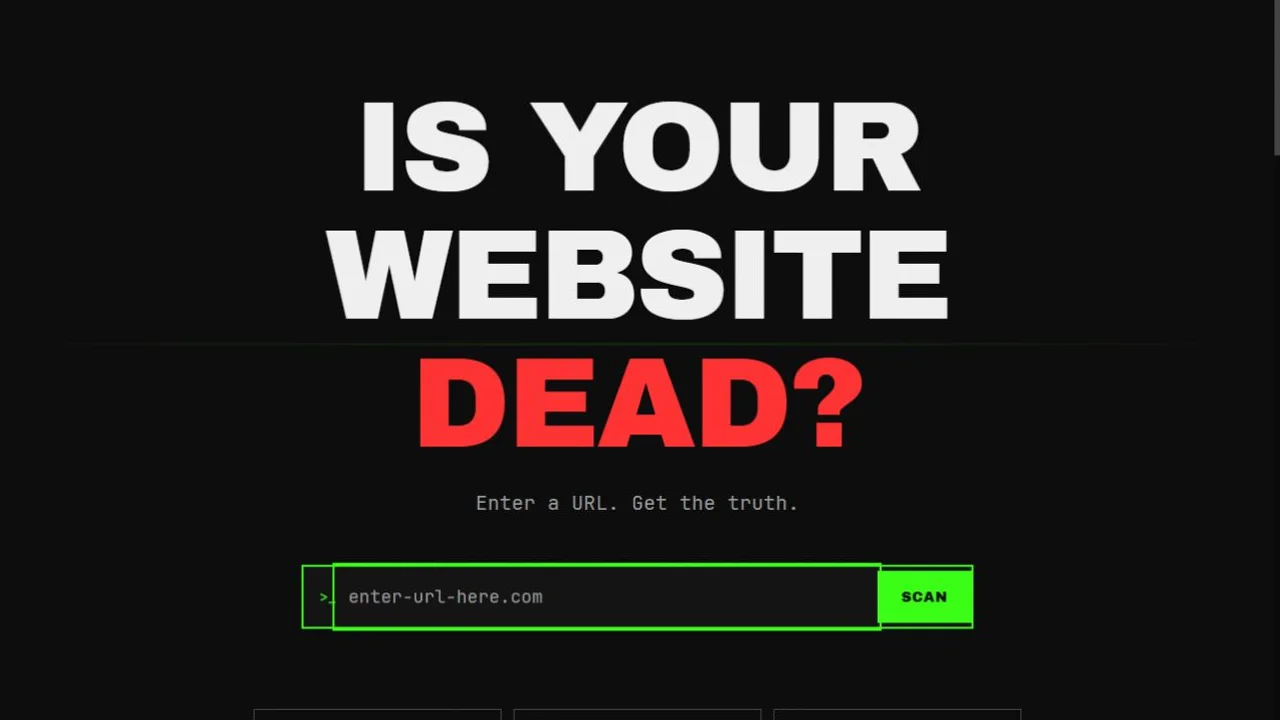
The scary wrapper hides a disciplined diagnostic system.
Site Autopsy makes an audit feel approachable without pretending the underlying work is simple. Every score has to come from a check, every finding needs context, and every result should lead somewhere useful.
Translate audit terminology into a cause, a priority, and a useful next action.
02
Protect the scan path
Treat URL retrieval, redirects, private networks, limits, and caching as product responsibilities.
03
Keep the score explainable
Make the final number traceable to visible checks instead of turning it into unexplained theater.
01problem.txt
The brief
Technical evidence was not reaching the person who needed it.
Website audit tools often expose valuable technical detail without giving a non-specialist a clear order of operations. The product challenge was to translate a bounded set of checks into an approachable summary while keeping the underlying evidence, limitations, and recovery priorities visible.
02response.txt
The response
Build the audit and the translation layer together.
I built Site Autopsy — a Next.js web app that analyzes a site through 41 checks across timestamps, links, security and quality, and technical ‘cobwebs.’ It converts that detail into a 0–100 Ghost Score, a plain-English cause of death, prioritized recovery steps, and a shareable result. Deep Autopsy can also weight and combine multiple pages into a site-wide score.
Under the hood
A result has to be safe, weighted, and explainable.
The interface may feel playful. The path from a submitted URL to a recovery plan is deliberately less theatrical.
InputOne URL→
GuardrailsValidate + retrieve→
Analysis41 checks→
InterpretationWeighted Ghost Score→
OutputRecovery plan
01
Measure more than speed
Freshness, links, security and quality, and technical cobwebs contribute to one explainable score.
Ghost Score 0–100 generated from 41 checks across 4 categories
Deep Autopsy combines multiple pages with homepage-weighted scoring
02
Treat the scanner as a security boundary
The production path is designed to reject unsafe destinations and unreliable responses before analysis continues.
Server-side scanning with private-network protection, response limits, and redirect revalidation
Rate limiting and result caching with a fail-closed production path
03
Turn diagnosis into action
The result explains what happened, what matters first, and what can be shared or improved next.
Shareable audit reports with auto-generated Open Graph images
Plain-English cause of death and prioritized recovery plan
Certified Alive badge for sites scoring 90 or higher
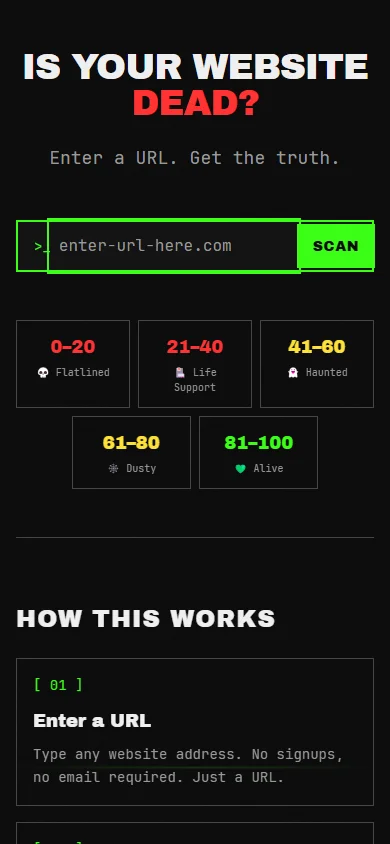
Responsive product experience
The diagnosis stays legible on the device a business owner has.
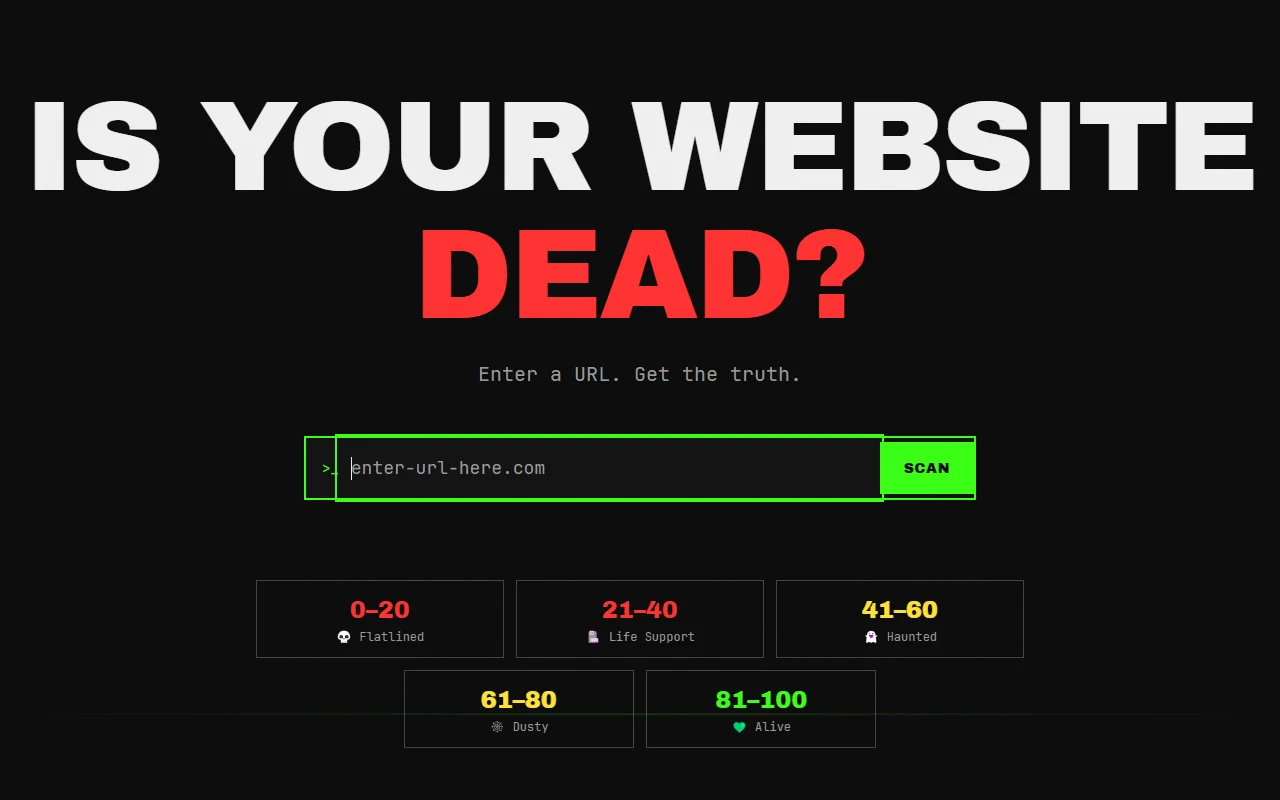
The score ladder establishes meaning before a scan begins. The result experience then reuses that visual language for findings, priorities, and recovery.
Interface decisions01
Explain the score before asking for a URL
Five named ranges make a future result understandable before the scan starts.
02
Use personality as a teaching device
“Ghost Score,” “cause of death,” and “recovery plan” make a dense audit easier to remember.
03
Keep the next action attached to the evidence
Prioritized repairs and shareable results turn a score into a practical conversation.
Prototype status
Built far enough to prove the system. Labeled honestly.
The public domain is offline while the product is prepared for a relaunch, so the case study shows what was built without presenting it as a service someone can currently use.
✓
41 checks translate technical website quality into language a business owner can use
✓
Deep Autopsy produces a weighted site-wide result instead of judging only the homepage
✓
Shareable reports, recovery plans, and Certified Alive badges turn analysis into action
✓
Public domain is currently offline, so the case study is labeled as a prototype rather than a live service