Consent before monitoring
The app does not quietly imply coverage. A reachable trusted contact and the required setup steps come first.
A privacy-first accountability app for sobriety, mental wellness, and personal safety, with clear check-ins, trusted contacts, and offline support.
Private beta · iPhone release preparation
Visit Live Site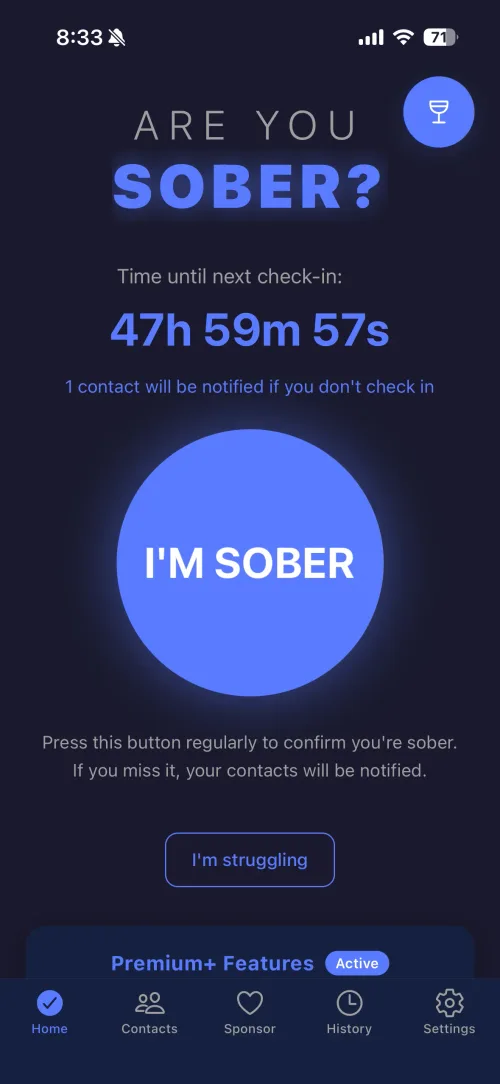
Trust is part of the interface
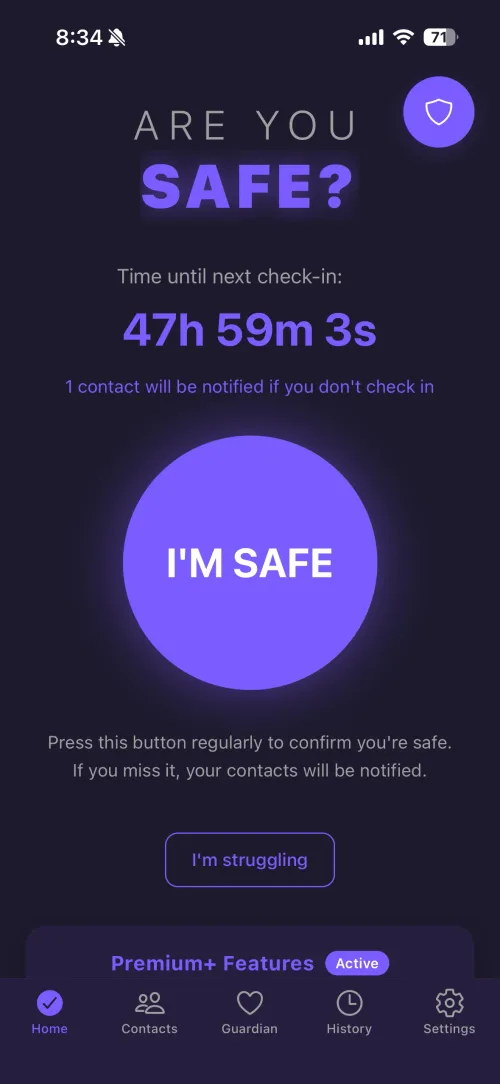
Every important state is made visible: the next deadline, who would be contacted, whether a check-in is synced, and what the user can do when they need help now.
The app does not quietly imply coverage. A reachable trusted contact and the required setup steps come first.
Local-first status and a visible sync path keep the interface honest when the network is unreliable.
Sensitive support, location, and relationship features are separated into deliberate, understandable choices.
Accountability software handles unusually sensitive moments. The experience had to be calm enough to use under stress, explicit about when monitoring begins, resilient through a weak connection, and careful not to promise protection it cannot guarantee. It also needed to support recovery, mental wellness, and personal safety without making those situations feel interchangeable.
I designed one private check-in system with three mode-specific voices: Sober, Okay, and Safe. React Native and Expo power the mobile experience; Firebase Authentication, Firestore, and Cloud Functions handle accounts, deadlines, and server-side alert work. Local caching queues a check-in when connectivity drops, while trusted-contact setup, sponsor requests, crisis resources, optional location sharing, and security controls remain clearly separated and consent-led.
The calm, visible states a person interacts with every day.
The systems that make deadlines, contacts, and weak connections dependable.
Sensitive permissions and account protection remain deliberate choices.
The calm, visible states a person interacts with every day.
The systems that make deadlines, contacts, and weak connections dependable.
Sensitive permissions and account protection remain deliberate choices.
Interface overview
Core flows, states, and decisions—presented together.
A focused recovery check-in with a visible deadline, trusted-contact coverage, and immediate support access.
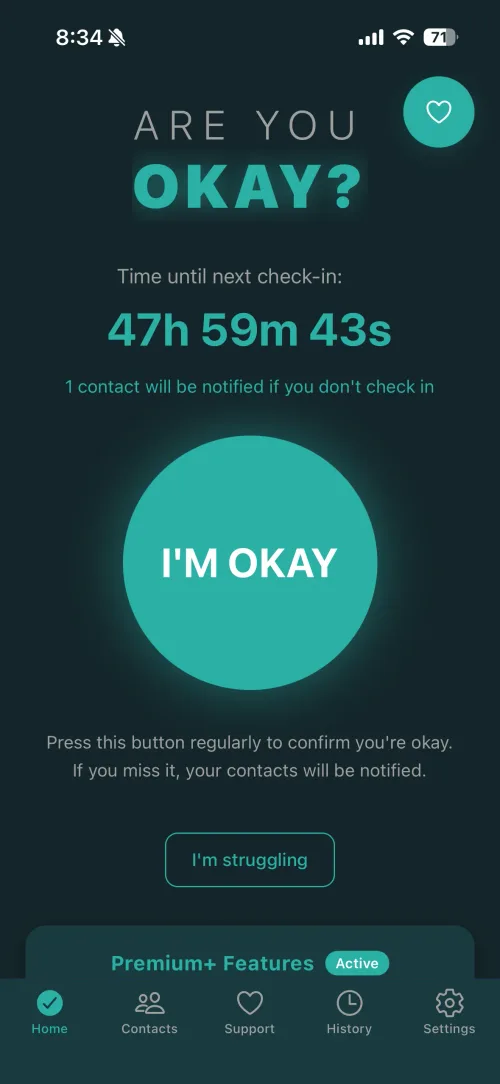
Are You SOS Sober mode check-in countdown and confirmation buttonThe same dependable check-in system, translated into gentler language for mental-wellness accountability.
Are You SOS Okay mode mental wellness check-inPersonal-safety wording, guardian support, and a clear confirmation action without exposing location by default.
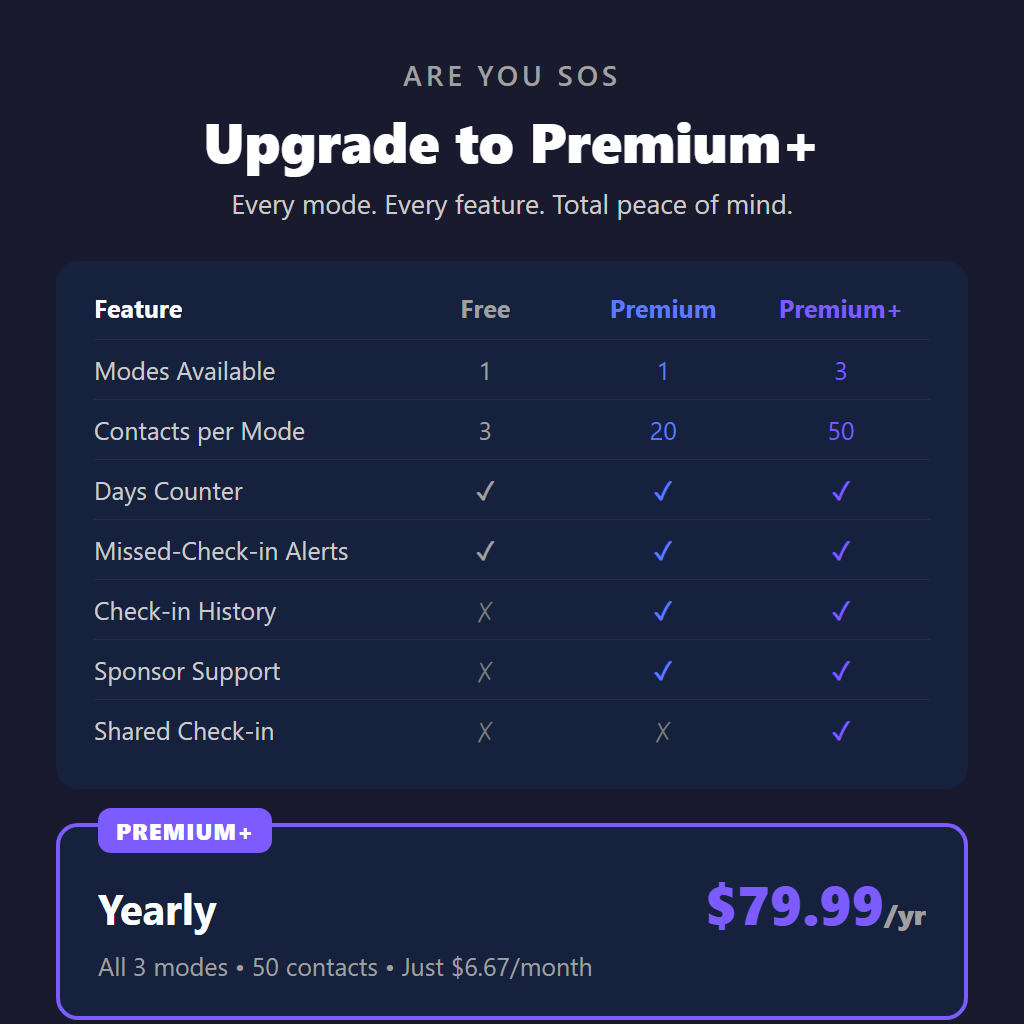
Are You SOS Safe mode personal safety check-inThe latest App Store review asset documents the live tier boundaries across modes, contacts, history, sponsor support, and shared check-ins.
Current Are You SOS Premium Plus feature comparison prepared for App Store reviewTell me what customers need to understand, trust, or do. I will shape that into a focused website—and stay available after it launches.